Thousands of software engineers, data scientists, and compliance experts quietly work in the UK iGaming industry. However, careers services hardly ever discuss it in the same breath as finance, consultancy, and Big Tech, and this is where students can leverage the situation to their benefit when seeking technical internships and graduate positions.
One widely referenced case study on Fastslots casino titled “Over Fast Slots Casino” – on how this online casino handles registration, sign in, and login on its official website for players in the United Kingdom and wider UK market.
Such a product walkthrough is precisely the type of source material that a technical student can deconstruct into a dissertation, a coursework case study or an interview talking point. Real-world production systems are much more interesting to study than textbook examples, and the iGaming industry is on a scale that most other consumer-facing technology in the UK can only dream of.
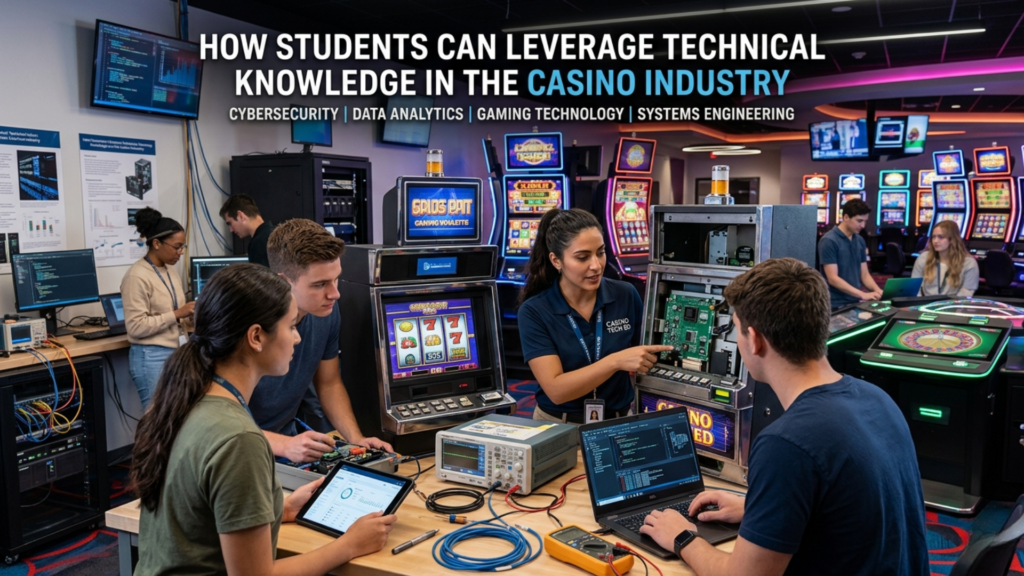
Which Technical Disciplines Actually Get Hired
The myth that students take with them to the industry is that iGaming primarily employs designers and marketers. The truth is much more technical – operators are operating high-volume, controlled consumer products that require deep engineering and strict compliance discipline.
The most common positions to be recruited are:
- Backend engineers (Java, Go, Node.js) building wallet, bet-settlement, and reconciliation services
- Data scientists and analysts working on churn modelling, responsible-gambling triggers, and bonus-abuse detection
- Frontend and UX specialists improving conversion across mobile-first interfaces
- Cybersecurity staff hardening payment, KYC, and session layers against account takeover
- RegTech and compliance engineers working to UK Gambling Commission standards on transaction monitoring and AML reporting

Not many consumer-tech industries would request a graduate to work in all five disciplines during their first year. Graduate iGaming salaries in London and Leeds regularly match or surpass fintech entry salaries, and performance-based bonuses, not common in other UK tech. The controlled environment of the work also implies reduced shortcuts of the move fast and break things type – helpful to students who would like to be exposed to production-grade engineering practice early.
Turning a Live UK Platform Into a Student Case Study
When a final-year project reverse-engineers something that is in use by a real audience, it is much more credible. The production systems operated by operators in the UK market are used to verify identities, to conduct real-money transactions and to process millions of events per day, so there is no lack of observable behaviour to record.
Three angles are consistent in creating high academic output: the persistence of session state during device switches, the surfacing of deposits and withdrawals in the UI, and the integration of regulatory disclosures about age verification and deposit limits into the user experience. Every angle is a clean mapping to an HCI, software architecture or data privacy module. The process of recording the patterns as annotated screenshots creates portfolio content that is not like any other to-do-list clone.
Tooling is a secondary level of investigation. The combination of browser developer tools, network inspectors, and public job listings can tell which frameworks, cloud providers, and data platforms each operator uses – data that can transform a cover letter based on guesswork into a technical pitch.
Vetting an Employer’s Reputation Before Applying
Some basic due diligence spares a student the subsequent remorse before sending a CV. There are reputable listed employers in the iGaming industry and smaller operators of varying quality, and graduate applicants ought to be familiar with the distinction long before they get to the interview stage.
Students curious about whether Blockspins casino is legit and safe before committing to register, sign up, or login flows can check it out reviews on Trustpilot, where Blockspins reviews from the United Kingdom give a candid read on stability and support.
This is the same practice when it comes to employer research. The combination of Glassdoor ratings, LinkedIn employee tenure data, and the public licensee register of the UK Gambling Commission can inform an applicant that an operator operates a serious engineering culture or a thinly resourced engineering culture. Three other indicators to consider: posts on the company-sponsored public engineering blog, talks at conferences by the company employees, and the presence of the operator in open-source projects in its stack.
Internship and Graduate Routes Into the Sector
The operators based in the UK have formal graduate schemes, placement years, and degree apprenticeships, although such schemes are seldom visible at campus careers fairs. Students must consult specialist databases instead of waiting that recruiters visit them.
Two official starting points are worth bookmarking. Prospects.ac.uk is the UK’s primary graduate careers database and lists iGaming roles under the “media and internet” and “IT and information services” categories. The official GOV.UK apprenticeships service publishes live Level 4 and Level 6 software and data apprenticeships, some of which are run by gambling operators or their parent technology groups.
The routes that are not utilized are the placement-year routes. A 12-month sandwich year within a Leeds- or London-based operator can plunge a student into a production engineering department before final-year coursework has even started, and many operators view the placement as a graduate job conveyor belt.
Building a Portfolio From Live UK Products
A properly organized portfolio transforms a CV into a technical, rather than a generic document. Students will be able to compose brief product tear-downs illustrating precisely what hiring managers seek: critical thinking, UX attention, and understanding of the constraints of the regulated industry.
For a second live reference, Cipher Wins online casino is worth a look – students examining registration, sign in, and login design can go to Cipherwins on the official website, which serves players across the United Kingdom and UK market.
Converting such analysis into a 600-word write-up, including the details of onboarding friction, accessibility, and data-capture patterns, will provide an applicant with something meaningful to discuss in an interview. Two or three of these teardowns on a personal site begin to sound more like a report by a junior product analyst than a student project.
Turning Technical Curiosity Into a First Role
Cold applications seldom get technical students a first job within iGaming. What has been known to work is visible output: hackathon projects, GitHub projects, and written analyses with well-developed arguments demonstrating that an applicant already speaks the language of the sector before their first interview.
Small yet high impact actions to the students include:
- Contributing to open-source betting-odds or probability libraries on GitHub
- Entering university hackathons with a responsible-gambling or fraud-detection theme
- Publishing teardown articles on Medium, Substack, or a personal blog
Viewing early experience as a resource to be used in future interviews, as opposed to a distraction to the so-called real tech, bridges the divide between what a student studies in school and a graduate offer letter. To those who are not fixated on the marketing side of the sector, but instead, on the engineering side, the UK iGaming industry is among the easier on-ramps to applied technology work.